
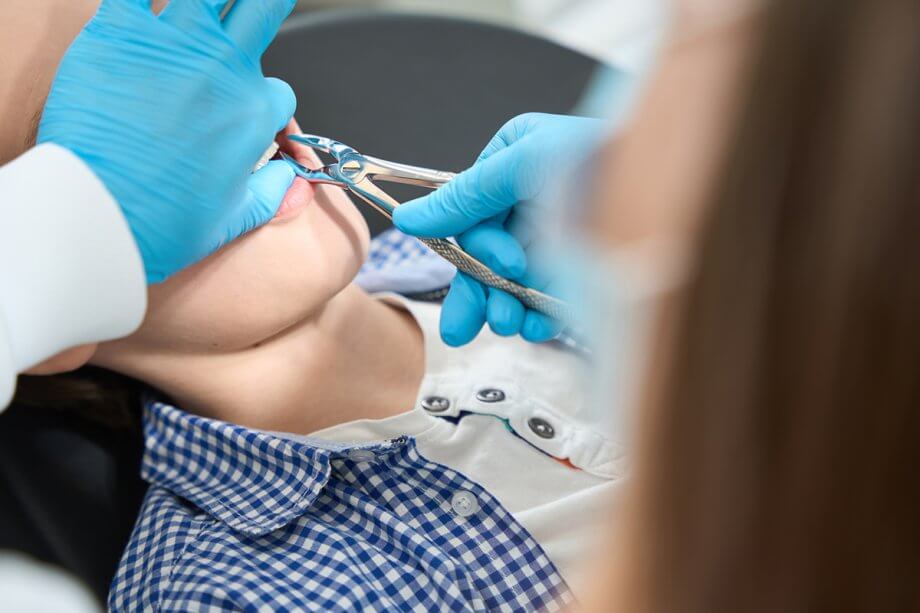
In certain situations, extracting one or more teeth is the best, and sometimes the only, option to restore your oral health. From severe decay to dental trauma, there are a variety of reasons that it may be necessary to remove teeth. In fact, it is one of the most common dental procedures.
If there’s a tooth extraction procedure in your future, you may be wondering what kind of healing timeline you can expect. The recovery process is unique to every individual, but a general guideline can be laid out to help you prepare for the days and weeks following your extraction.
Immediately After a Tooth Extraction
In the first few minutes to the initial hours after your procedure the goal is to manage bleeding and swelling. A blood clot will form in the socket after the tooth is removed, but some residual bleeding is normal. You will be instructed to bite down on gauze to control bleeding, periodically replacing saturated gauze with new until it comes out clean. Apply ice to the face in the area of the extraction to reduce swelling and inflammation. Avoid eating until the numbness from the local anesthesia wears off (between 1-2 hours) and be careful not to bite your lips, cheeks, or tongue. Do not drink from a straw for at least 2 weeks following tooth extraction.
The First Week of Healing
During the first week following your extraction you can expect to have some swelling and tenderness in the affected area of your mouth. Applying ice is most effective in the first 3-4 days, after which swelling should begin to subside. Over the counter pain medication should make any discomfort manageable. It is best to eat a soft diet for the first week, gradually eating more solid foods as you feel comfortable. Avoid spicy foods and allow hot foods and beverages to cool before consuming. If you experience any unusual symptoms such as severe pain, uncontrolled bleeding, or fever, contact your periodontist.
Healing From Week One to Week Three
By the second week after your procedure you should see a significant improvement. Discomfort and swelling should subside and you should see signs of tissue repair at the site. You should be able to return to regular activities and begin eating more solid foods. Take care when chewing and brushing your teeth to avoid that area of your mouth. Continue to avoid straw use.
Long Term Healing: Weeks Three Through Twelve
After 3 weeks the soft tissues of your mouth will have mostly healed. However, depending on the rest of your treatment, some healing may still be happening. If you also had bone grafting in preparation for dental implants, it can take weeks and even months for the bone tissue to regenerate. Continued monitoring will be necessary to determine when you are ready for the next step in your treatment.
Factors That Influence the Healing Timeline
- Age and general health. Your age will have an effect on your healing timeline, as the younger you are the faster you heal. Your overall health is also a factor in the recovery process.
- Smoking and alcohol use. Avoiding smoking and drinking alcohol will help you heal faster and experience less discomfort and post-op side effects.
- Complexity of the extraction. Some extractions are more invasive than others, requiring cutting of tissues in order to remove the tooth. It will take longer to recover from a surgical extraction than a non-surgical extraction.
- Pre-existing oral health conditions. If you had existing gum disease at the time of your extraction it may take longer to heal, simply because the tissues were already inflamed prior to the procedure.
Tips for a Smooth and Comfortable Recovery
- Avoid drinking from a straw. This can dislodge the blood clot in the socket, resulting in a condition called dry socket.
- Apply ice to the affected area, alternating 20 minutes on and 20 minutes off for the first 24-48 hours or until swelling subsides.
- Eat soft foods such as yogurt, applesauce, cottage cheese, jello, and pudding for the first few days until you feel up to eating more solid foods.
- Sleep with your head slightly elevated for the first few days until swelling subsides.
Moving Forward With Confidence After Your Extraction
By following the after care instructions provided by your endodontist you can improve your recovery experience and accelerate healing so that you’re ready for the next step in your treatment. Replacing extracted teeth allows you to restore your chewing capabilities as well as your smile for improved oral health and confidence going forward. Hudson Valley Periodontics & Implantology is here for you every step of the way from the first consultation to the final restoration. Call 845-623-6666 or contact us today with any questions or to schedule an appointment.
Frequently Asked Questions About Recovery After Extractions
When can I eat normally again after my extraction?
It is best to be mindful when it comes to eating for the first the first week, then proceed with caution depending on how you feel. After 2 weeks you should be able to eat normally again.
How do I know if I’m healing properly?
Signs of healing include reduced redness and swelling, improved comfort, and dissolving stitches. If you experience severe pain, prolonged bleeding, or fever, contact your periodontist.
At Hudson Valley Periodontics & Implantology we are here to support you from your initial consultation to your final restoration. Our doctors and team are dedicated to providing personalized care in a comfortable and relaxing environment. To learn more or to schedule an appointment, contact us today.